Healthcare organizations generate large volumes of clinical documentation every day. Every patient encounter, diagnosis, procedure, and treatment plan must be accurately documented, coded, and processed before a claim can be submitted.
While patient care remains the top priority, coding and administrative workflows often create significant operational challenges. Manual coding processes, disconnected systems, and repetitive data entry can slow reimbursement and increase administrative burden.
This is why Medical Coding Software has become an essential part of modern healthcare operations.
Today’s AI-powered solutions go beyond assigning codes. They help connect clinical documentation, coding, billing, and claims workflows into a more efficient process that supports both providers and revenue cycle teams.
What Is Medical Coding Software?
Medical Coding Software helps healthcare organizations translate clinical documentation into standardized billing and coding systems such as ICD-10-CM, CPT®, HCPCS, and HCC codes.
Traditionally, coders review clinical notes, identify diagnoses and procedures, assign codes, and prepare documentation for billing. This process often requires significant manual effort and multiple reviews.
Modern AI-powered coding solutions assist by analyzing clinical documentation and identifying relevant coding opportunities based on the information documented during the patient encounter.
Instead of functioning as a separate administrative task, coding becomes part of a connected healthcare workflow.
The process typically follows this path:
Patient Encounter → Clinical Documentation → Medical Coding Software → Claims Processing → Reimbursement
When information flows seamlessly through each stage, healthcare teams spend less time transferring data between systems and more time focusing on patient care.
Why Accurate Clinical Documentation Matters
Coding quality depends heavily on documentation quality.
Incomplete or unclear documentation can create coding gaps, billing delays, reimbursement issues, and increased administrative workload.
Every diagnosis, treatment decision, procedure, and clinical observation recorded during the encounter contributes to the coding process.
This is why many healthcare organizations are investing in Clinical Documentation Software that helps create accurate and structured medical records from the start.
When documentation and coding work together, providers can reduce inefficiencies while improving workflow consistency.
A connected documentation and coding process creates a stronger foundation for claims preparation and reimbursement.
How AI Is Changing Medical Coding Software
Artificial intelligence is transforming healthcare operations by reducing repetitive manual tasks and improving workflow efficiency.
Instead of manually searching through lengthy notes, AI-powered coding systems can review documentation, identify relevant clinical information, and recommend appropriate codes.
This does not replace professional review. Rather, it supports coding teams with faster access to relevant coding suggestions and clinical context.
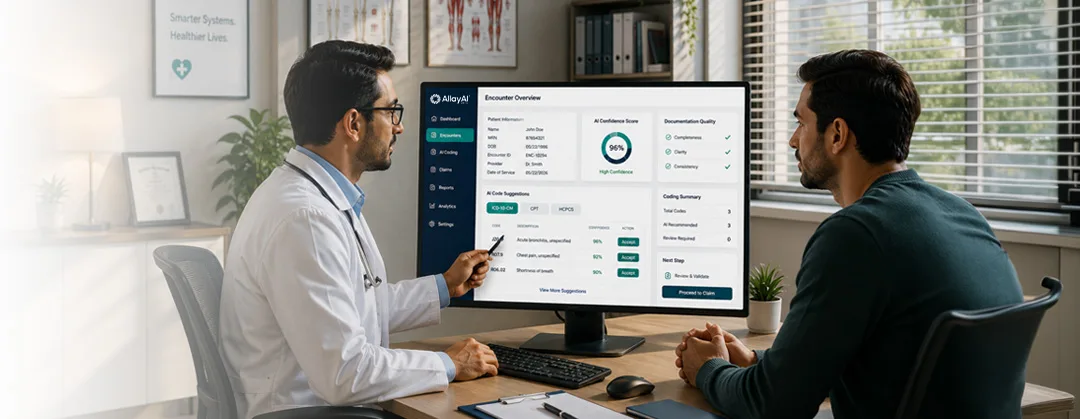
For example, HELIX Coding analyzes documentation and recommends ICD-10-CM, CPT®, HCPCS, HCC, and modifier codes based on the clinical information contained within the note.
This allows coding teams to focus on validation and quality review rather than spending excessive time searching for code opportunities.
Benefits of AI-Powered Medical Coding Software
Improved Coding Accuracy
AI-powered coding tools analyze clinical context and help identify relevant diagnoses, procedures, and coding opportunities.
By reducing manual searching and review time, healthcare organizations can create more consistent coding workflows.
Faster Coding Workflows
Manual coding often requires reviewing large amounts of documentation before identifying applicable codes.
Modern Automated Medical Coding solutions streamline this process by surfacing coding recommendations directly from clinical documentation.
This helps reduce turnaround times and move encounters through the billing process more efficiently.
Better Revenue Capture
Missed diagnoses, incomplete documentation, and overlooked procedures can impact reimbursement.
By supporting coding teams with context-aware recommendations, healthcare organizations can identify supported coding opportunities and improve claim completeness.
Reduced Administrative Burden
Administrative staff frequently spend time moving information between documentation, coding, and billing systems.
Integrated solutions reduce duplication and improve operational efficiency across departments.
Connecting Coding With Revenue Cycle Management
Revenue cycle performance depends on more than accurate coding. Healthcare organizations must also manage claims generation, submission, payment tracking, and denial management. When coding and billing workflows are disconnected, staff frequently spend time transferring information between systems.
Connected platforms help reduce these inefficiencies.
By combining coding recommendations with Revenue Cycle Management Software, healthcare organizations can create a smoother path from documentation to reimbursement. This connected approach improves visibility across the revenue cycle, reduces administrative burden, and helps teams manage claims, payments, and billing workflows more efficiently.
Organizations using integrated workflows often experience better coordination between clinical, coding, and billing teams while reducing delays throughout the reimbursement process.
What to Look for in Medical Coding Software
Selecting the right solution requires evaluating more than AI capabilities alone.
Healthcare organizations should consider how the platform supports broader operational workflows.
Clinical Documentation Integration
Coding begins with documentation. Solutions that integrate directly with Clinical Documentation Software help eliminate manual data transfers and improve workflow continuity.
Comprehensive Code Support
Healthcare organizations need support for industry-standard coding systems including ICD-10-CM, CPT®, HCPCS, modifiers, and HCC coding.
Workflow Connectivity
The strongest platforms connect documentation, coding, claims, and reimbursement processes into a unified workflow. This reduces duplication and improves efficiency across departments.
Human Oversight
AI should support healthcare professionals, not replace them. The best coding solutions provide recommendations while maintaining appropriate review and approval processes.
Medical Coding Software and Healthcare Automation
Healthcare organizations are increasingly adopting automation technologies to simplify administrative operations.
Coding plays a critical role within this larger transformation. When coding systems connect with Healthcare Workflow Automation solutions, organizations can streamline scheduling, documentation, coding, billing, and claims management through a unified process.
This creates greater operational efficiency while reducing repetitive administrative tasks.
Rather than functioning as isolated systems, healthcare technologies work together to support both patient care and business operations.
The Future of Medical Coding Software
As healthcare technology continues to evolve, coding will become increasingly connected to broader clinical and operational workflows. Future solutions will focus not only on coding accuracy but also on workflow continuity, automation, and interoperability. Healthcare organizations are seeking platforms that connect documentation, coding, billing, and reimbursement within a single ecosystem.
This shift helps reduce fragmentation while improving visibility across the patient journey.
AI-powered Healthcare Coding Software will continue to play an important role in helping providers manage growing administrative demands while maintaining coding quality and compliance.
Conclusion
Medical coding software is no longer just a tool for assigning codes. It has become an important part of a connected healthcare workflow that links clinical documentation, coding, billing, and reimbursement.
As healthcare organizations face growing administrative demands, AI-powered solutions help reduce manual work, improve coding accuracy, and support faster claims processing. The greatest value comes when coding is integrated with the systems and workflows healthcare teams already use every day.
Allay AI HELIX Coding helps healthcare organizations move beyond traditional coding processes by connecting clinical documentation with intelligent coding recommendations and downstream revenue cycle workflows. By bringing documentation, coding, and claims management together, practices can improve operational efficiency while maintaining the human oversight required for high-quality patient care.
As healthcare continues to evolve, connected and intelligent coding workflows will play an increasingly important role in helping organizations streamline operations, strengthen revenue cycle performance, and focus more time on delivering
Frequently Asked Questions
What is Medical Coding Software?
Medical Coding Software helps healthcare organizations convert clinical documentation into standardized billing and coding systems such as ICD-10-CM, CPT®, HCPCS, and HCC codes.
How does Automated Medical Coding work?
Automated Medical Coding uses AI to analyze clinical documentation and recommend relevant coding opportunities based on diagnoses, procedures, and clinical context.
Can AI replace medical coders?
No. AI supports coding workflows by providing recommendations and insights. Professional review and oversight remain essential for coding accuracy and compliance.
Why is coding connected to clinical documentation?
Coding relies on accurate clinical documentation. Better documentation improves coding quality, reduces errors, and supports cleaner claims.
How does HELIX Coding support healthcare organizations?
HELIX Coding analyzes clinical documentation and recommends ICD-10-CM, CPT®, HCPCS, HCC, and modifier codes while helping connect coding workflows with claims and reimbursement processes.